
 EN
EN


Treating High CO Emissions in Fixed-Grate Boilers – Is Boiler Replacement Necessary? Practical Solutions from DIVI
Why do many factories operating wood-fired fixed-grate boilers still face CO emissions exceeding limits, even when the fuel is not poor and a dust-treatment system is already in place? Can high CO emissions be resolved without replacing the entire boiler technology and without disrupting production? This article shares a real project implemented by DIVI, helping a boiler meet environmental standards by upgrading the core issues correctly.
I. Current Situation: High CO in Wood-Fired Fixed-Grate Boilers
In real operation, fixed-grate boilers remain a common choice in many factories due to low capital cost, simple structure, and ease of operation. However, a frequent major drawback is CO concentration in flue gas exceeding regulatory limits, especially when measured under QCVN 19:2009/BTNMT.
Carbon monoxide (CO) is a byproduct of incomplete combustion. When CO exceeds permitted thresholds, factories face:
- Risk of environmental penalties
- Risk of forced shutdown
- Loss of credibility with partners and customers
- High remediation costs if the wrong approach is taken
Notably, many factories already have dust-treatment systems, and the flue gas may look “clean” to the naked eye, yet CO values still fail to meet requirements.
II. Is a Boiler Technology Change Necessary?
This is a question DIVI frequently receives from customers:
“My fixed-grate boiler has been running for years and now CO is high. Do I have to replace it or switch to another technology?”
The answer is: NOT NECESSARILY.
In many cases, the problem is not the boiler technology itself, but rather:
- Furnace design
- Fuel feeding method
- Oxygen–fuel ratio control
- Combustion-zone temperature
DIVI has proven this through a real project.
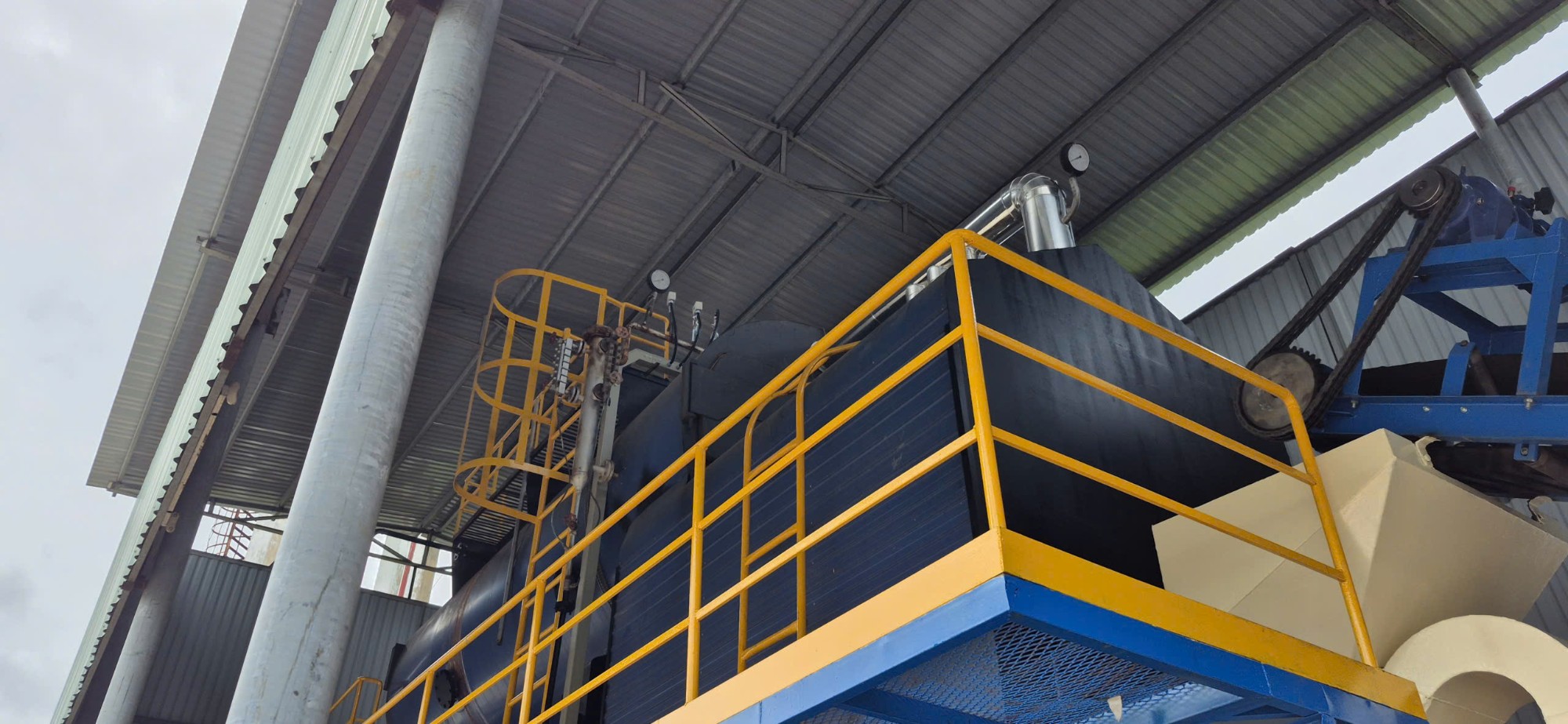 Do stationary grate boilers need a change in boiler technology
III. The Factory’s Real Challenge in the DIVI Project
DIVI’s project involved a 5-ton steam/hour fixed-grate boiler using the factory’s waste wood as fuel.
A key point: the fuel was entirely dry, good-quality wood—not wet or low-grade fuel. The dust-treatment system was installed and operating stably. The factory maintained normal production without major incidents. However, despite these conditions, CO emissions still exceeded the allowable limit under QCVN 19:2009, becoming a serious environmental issue requiring a complete solution.
This shows that high CO does not necessarily mean poor fuel quality.
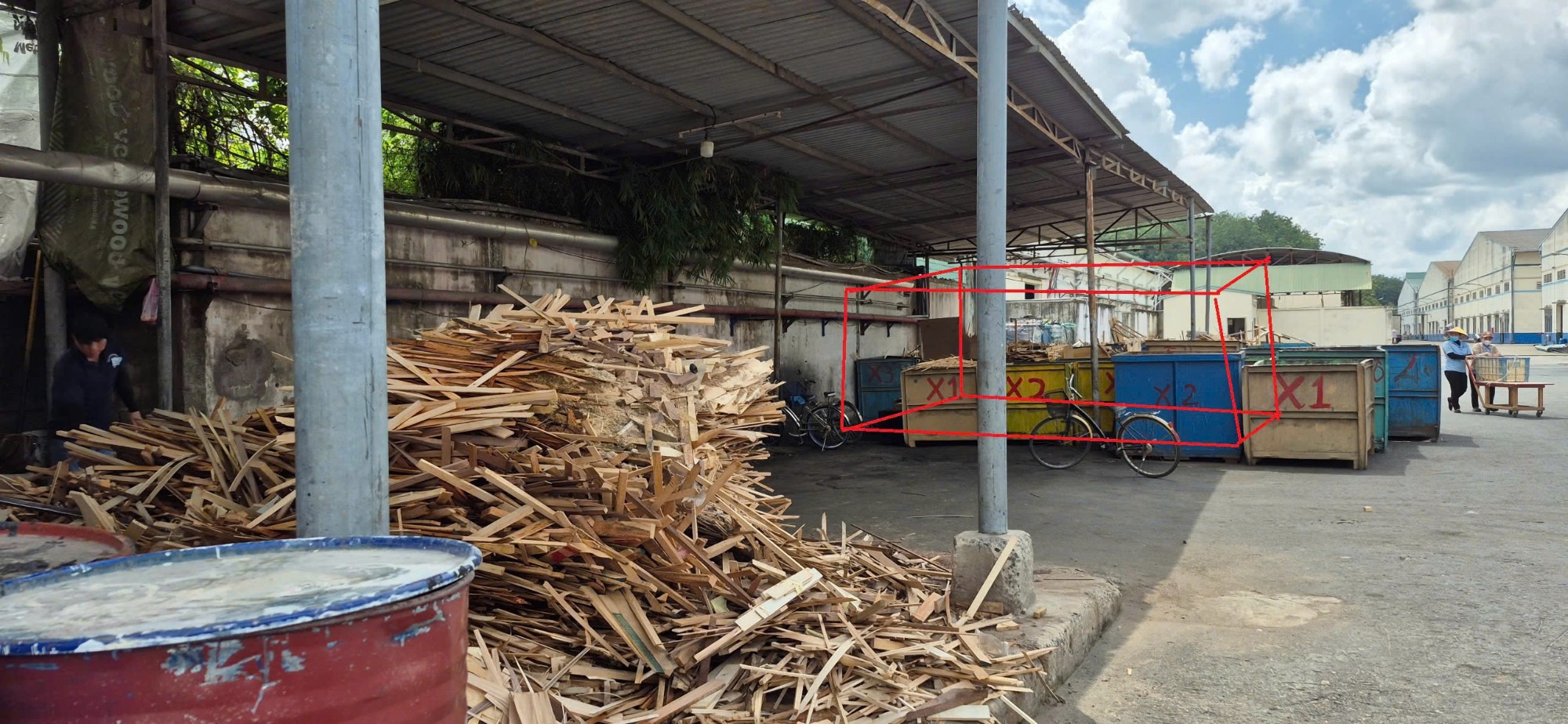 The practical problem of a stationary grate boiler in a factory.
IV. DIVI’s Differentiated Commitment
Before implementation, DIVI made a clear commitment to the customer: “Payment will be made only when emissions meet environmental standards.”
This commitment forced DIVI to address the problem seriously and practically. It meant the engineering team had to identify the true root causes of CO formation, select effective technical solutions with long-term sustainability, and avoid temporary fixes. Every action focused on real measurement results—not superficial compliance—ensuring stable operation after acceptance.
V. Assessment of the Existing Flue Gas Treatment System
Based on the site survey, DIVI recorded:
1. Dust in the Flue Gas
DIVI observed that dust had been treated reasonably well by the existing water spray tower, with dust concentration within the allowable environmental limit. However, even with dust compliance, the system’s heat-exchange performance was not optimized, leading to heat losses and underutilized energy-saving potential.
2. Suitable Dust Treatment Configuration for Fixed-Grate Boilers
For fixed-grate boilers, dust treatment is not overly complex when properly engineered. A common and effective configuration combines a dry dust cyclone—preferably a multi-cyclone to improve coarse dust separation—together with a Venturi scrubber to capture remaining fine dust in wet form. This layout helps ensure compliant dust levels while matching the operating characteristics of fixed-grate boilers.
3. A Technical Issue Often Overlooked
A critical factor often overlooked is that flue gas scrubbing water must be clean. Dirty water cannot effectively wash the flue gas, even if the system includes cyclone and spray tower equipment. This is why many fully equipped flue gas systems still perform poorly, with unstable CO and dust levels that fluctuate significantly between measurements.
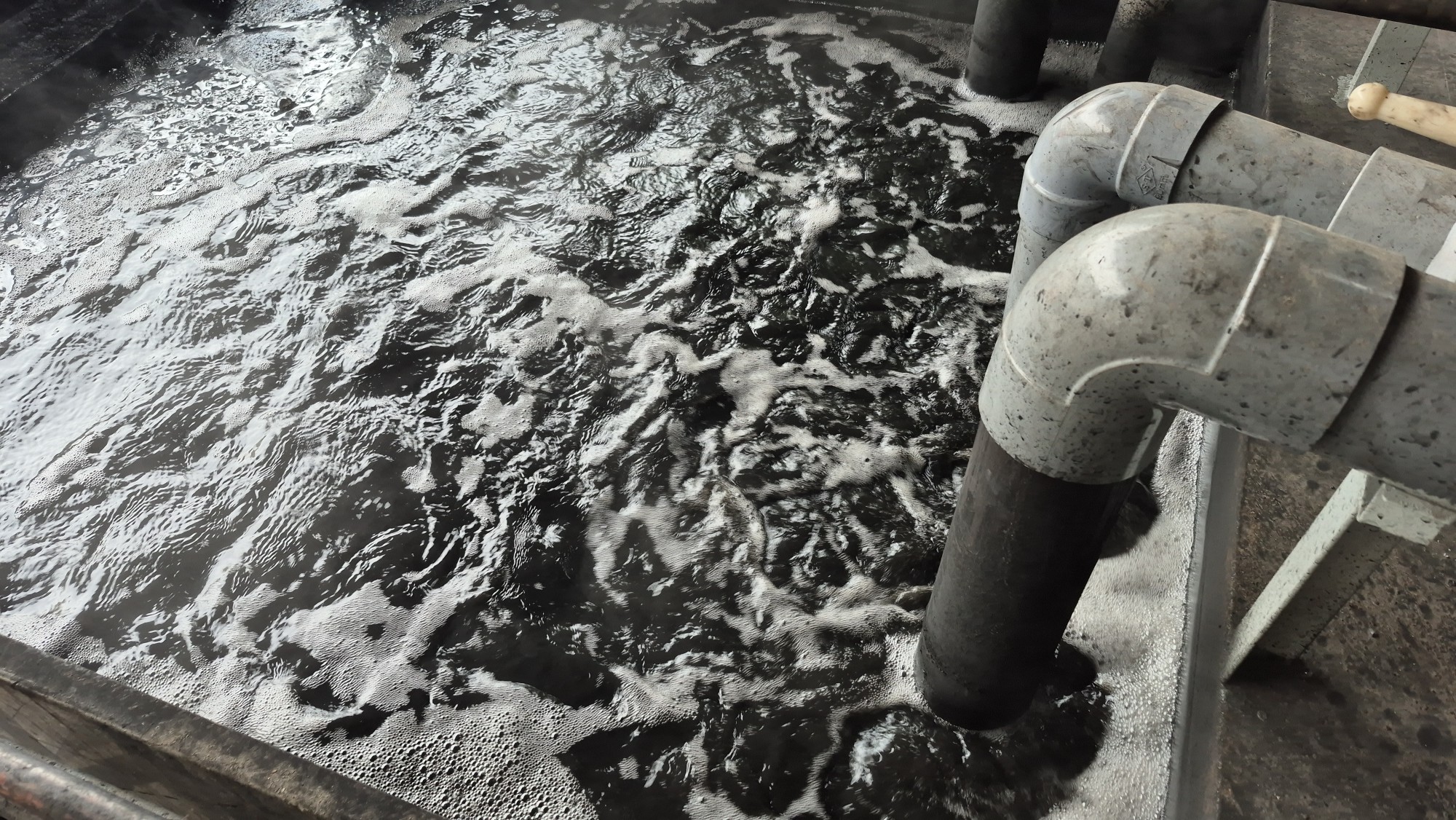 Assessing the current state of the exhaust gas treatment system for stationary grate boilers.
VI. Root Cause: Why Is CO High in Fixed-Grate Boilers?
From DIVI’s field experience, high CO typically comes from three main causes:
Cause 1: Fuel Moisture
Wet fuel → incomplete combustion → CO increases
In this project: dry wood → this cause was eliminated
Cause 2: Non-Optimal Oxygen–Fuel Ratio
This is the largest cause.
- Too little oxygen → incomplete burn → CO forms
- Too much oxygen → cools the combustion zone → CO still forms
With manually fed fixed-grate boilers, fuel is typically fed:
- Unevenly
- Based on operator “feel”
Meanwhile:
- Air fans often run at nearly fixed settings
- They do not track load changes
➡️ Result: incomplete combustion → CO increases significantly
Cause 3: Combustion-Zone Temperature Not High Enough
This is the key issue in many older boiler designs.
If furnace temperature is below 800°C, CO formation increases sharply.
In older boilers:
- Water tubes are placed too close to the grate
- Heat is absorbed too early
- The combustion zone is “cooled down”
➡️ Fuel cannot burn completely, even if oxygen is sufficient.
VII. DIVI Solutions Implemented to Treat High CO Emissions
Solution 1: Furnace Retrofit
DIVI identified furnace retrofit as the critical step to eliminate high CO at the source. Specifically, DIVI raised the furnace and moved water tubes out of the direct combustion zone to prevent flame cooling, while installing refractory bricks and full insulation.
As a result, combustion-zone temperature increased significantly, combustion became more complete, fuel burnout improved, and CO levels dropped sustainably at the origin.
Solution 2: Automatic Fuel Feeding
DIVI implemented automatic fuel feeding to fully address the uneven feeding of manual operation. A wood conveyor feeding system ensured fuel entered the furnace evenly, continuously, and stably according to operating load. The system also included anti-backburn protection to ensure safety during operation.
This eliminated the “too much fuel / too little fuel” cycle, stabilized combustion, and reduced CO formation.
Solution 3: Automated Combustion Control
DIVI integrated an automatic control system using PLC and VFDs, enabling synchronized control of key combustion equipment, including forced draft fan, induced draft fan, and fuel conveyor speed. This control approach allows automatic adjustment based on actual steam load, maintaining the oxygen–fuel ratio at the optimal level throughout operation.
The result is more stable combustion and a sustainable reduction in CO emissions without dependence on manual operator actions.
VIII. Ensuring No Production Disruption
A critical requirement from the factory was: “No long production shutdown.”
During the retrofit, DIVI deployed a 1.5-ton/hour boiler as a temporary replacement to keep production running continuously. With this plan, all retrofit work was executed without affecting production schedules, interrupting the process line, or creating additional operational risks.
IX. Acceptance Results After Retrofit
After completion, emissions were measured by an independent unit appointed by the factory. Results showed CO far below the allowable limit, dust meeting environmental standards, stable steam quality, and safe operation. This confirmed DIVI’s initial commitment was fully delivered, meeting both environmental compliance and long-term operational requirements.
X. An Important Technical Note on the Water Spray Tower
Due to constraints in the environmental permit, the water spray tower was installed upstream of the induced draft fan. This layout causes water carryover into the fan, placing mechanical components in a continuously humid environment. As a result, fan blades wear faster, bearings fail earlier, and long-term maintenance and replacement costs increase significantly.
DIVI Technical Recommendation
If technically and legally permitted, the spray tower should be installed downstream of the induced draft fan to minimize water and moisture exposure to the fan. This protects the fan, extends the lifespan of the entire flue gas treatment system, and significantly reduces lifetime operating and maintenance costs.
XI. Conclusion
Treating high CO emissions in fixed-grate boilers does not necessarily require replacing the boiler, nor does it require excessive investment—if approached correctly. The most important factors are correctly identifying the causes of CO formation, upgrading the key furnace and fuel-feeding points, and applying scientific combustion control to ensure complete burnout, compliant emissions, and long-term stable operation.
If your factory is facing fixed-grate boiler CO emissions exceeding limits, DIVI is ready to support you in achieving environmental compliance, stable operation, and long-term cost optimization through focused and sustainable retrofit solutions.
Other news
-
Steam Separator – An Effective Solution for Dry Steam
29/12/2025, -
What Is a Steam Trap? Principles, Types, and How to Select the Right Steam Trap for Your Steam System
07/12/2025, -
COMPARISON OF STEAM TRAPS: PRINCIPLES – EXPERIMENTS – OPTIMAL SELECTION FOR STEAM SYSTEMS
29/11/2025, -
Compact Biomass-Fired Boiler DVG-VN – The Optimal Fossil-Fuel Replacement Solution for Factories
23/11/2025, -
Which Boiler Should You Choose: Fixed Grate or Fluidized Bed? Detailed Efficiency, Cost & Environmental Comparison
24/06/2025, -
5 Common Mistakes in Industrial Steam Distribution Systems
11/06/2025, -
Mr. Boiler Speaks: Wake-Up Call from an Industrial Icon
09/06/2025, -
What is a Thermal Oil Heater? Structure, Benefits & Safety Tips
27/05/2025, -
3 Danger Signs of Boiler Operation You Should Never Ignore
24/05/2025, -
7 Common Causes of Boiler Flue Gas Issues – Effective Treatment Solutions
08/05/2025,

DIVI GROUP CO., LTD
Office: 588 Pham Van Chieu street, ward 16, Go Vap district, Ho Chi Minh city, Viet Nam
Factory: Khanh Binh 10 street, Khanh Van quarter, Khanh Binh ward, Tan Uyen city, Binh Duong province, Viet Nam
Hotline: +84 942 488 818
Tel: 0274 3800 338
Email: info@divigroup.com.vn

Business license : 0311016524, issue date : 26/07/2011 by Department of Planning and Investment of Ho Chi Minh City
Representatives: Lê Văn Hiếu
Online :
Vistited :