 EN
EN


During boiler operation, blowdown is mandatory to remove sludge, scale, and suspended solids from the water. If not properly handled, hot blowdown water can:
-
Kill microorganisms in wastewater treatment systems, severely impacting the environment.
-
Cause serious danger to operators due to high temperature and pressure.
The safe solution is to use a Blowdown System.
Currently, there are two common types:
-
Blowdown Separator (with cold water injection)
-
Blowdown Tank (self-cooling, for high pressure)
1. Blowdown Separator (Low-Pressure Type with Cold Water Injection)
Working Principle
-
Flash steam is released through a steam outlet pipe.
-
Remaining hot water is cooled by injecting cold water.
Advantages
-
Compact size.
-
Low initial investment cost.
-
Easy installation for low-pressure systems.
Disadvantages
-
Depends on a stable cold water supply.
-
Requires temperature control valves to maintain discharge water below 60°C.
-
Not suitable for high-pressure boilers or multi-boiler systems.
2. Blowdown Tank (High-Pressure Type)
Working Principle
-
Designed as a sealed tank with large volume.
-
Remaining water from the previous blowdown cools down and is used to cool the next discharge.
-
No continuous cold water supply is required.
Advantages
-
Safe for high-pressure operation (designed according to ASME Section VIII).
-
Independent from external cooling water.
-
Long service life and suitable for multiple boilers.
Disadvantages
-
Larger size and heavier weight.
-
Higher investment cost.
3. Comparison Between Blowdown Separator & Blowdown Tank
| Criteria | Blowdown Separator (Low Pressure) | Blowdown Tank (High Pressure) |
|---|---|---|
| Cooling method | Cold water injection | Self-cooling from stored water |
| Volume | Small | Large |
| Applicable pressure | Low – Medium | High |
| Safety level | Depends on cold water | High & stable |
| Cost | Lower | Higher |
| Application | Small plants, low discharge | Large plants, multiple boilers |
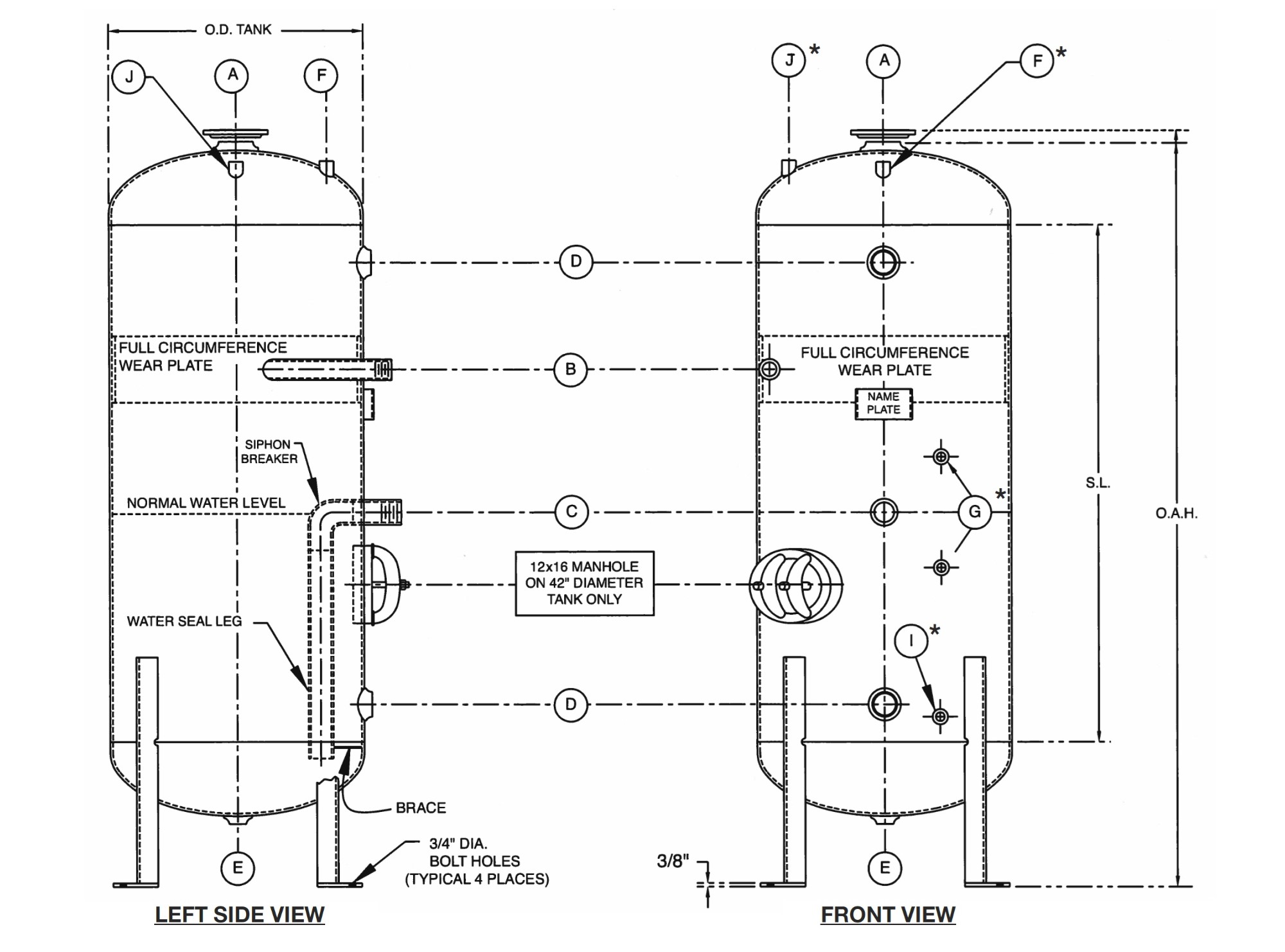
4. High-Pressure Blowdown Tank Specifications
| Model | Outside Diameter (DN) | Shell Length (mm) | Overall Height (mm) | Blowdown Volume (L) | Operating Weight (kg) | Weight with Water (kg) | Shipping Weight (kg) | Maximum Allowable Pressure (bar) |
| BDT1648 | DN400 | 1220 | 1910 | 79 | 277 | 435 | 197 | 10,3 |
| BDT1860 | DN450 | 1530 | 2240 | 136 | 404 | 540 | 268 | 10,3 |
| BDT1872 | DN450 | 1830 | 2440 | 151 | 450 | 602 | 299 | 10,3 |
| BDT2448 | DN600 | 1220 | 1980 | 204 | 528 | 733 | 324 | 10,3 |
| BDT2460 | DN600 | 1530 | 2290 | 246 | 612 | 859 | 367 | 10,3 |
| BDT2472 | DN600 | 1830 | 2490 | 288 | 699 | 983 | 411 | 10,3 |
| BDT3060 | DN750 | 1530 | 2340 | 401 | 900 | 1300 | 522 | 10,3 |
| BDT3072 | DN750 | 1830 | 2640 | 469 | 1022 | 1419 | 612 | 10,3 |
| BDT3672 | DN900 | 1830 | 2720 | 693 | 1379 | 2071 | 721 | 10,3 |
| BDT4260 | DN1050 | 1530 | 2490 | 840 | 1579 | 2419 | 748 | 10,3 |
5. Conclusion
-
For low-pressure boilers, Blowdown Separator is a cost-effective choice.
-
For high-pressure boilers, multiple boilers or maximum safety requirements, Blowdown Tank is strongly recommended.
DIVI Group, with more than 15 years of experience in manufacturing and operating industrial boilers, commits to:
-
Design compliant with ASME & TCVN standards
-
5-year warranty
-
Safe – cost-effective – environmentally compliant solutions
Hotline/Zalo: +84 942 488 818 (Mr. Hieu)
PRINCIPLE DIAGRAM
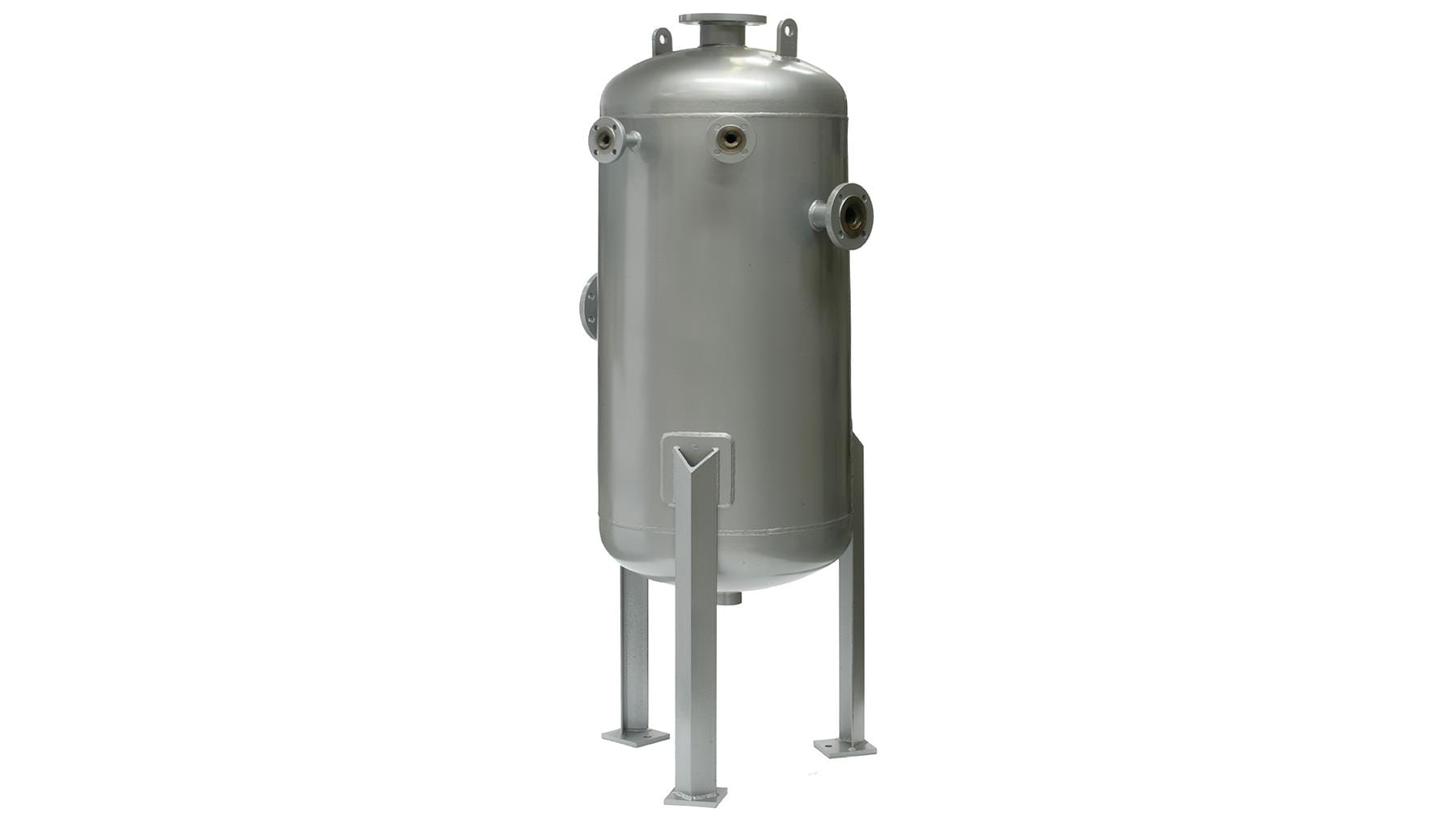
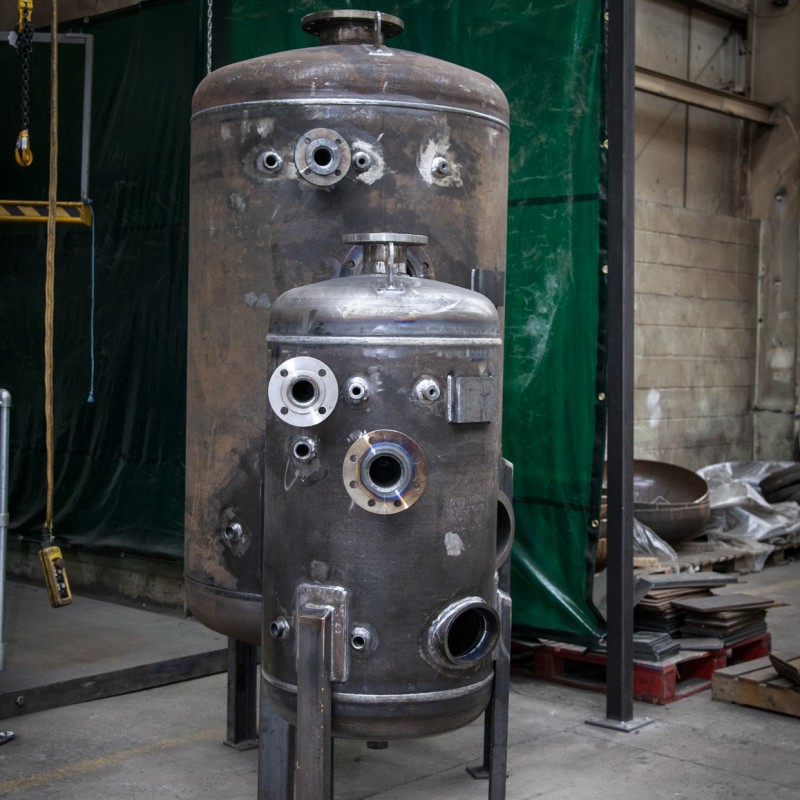
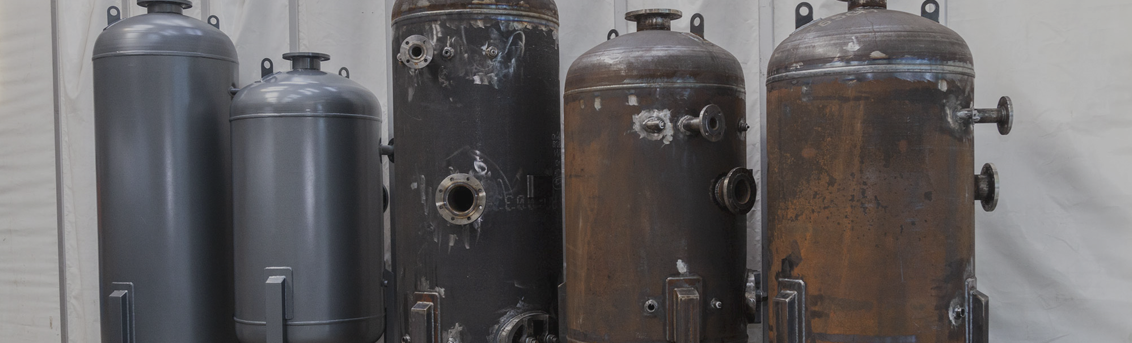
 blowdown tank
Photo realistic
Other Product
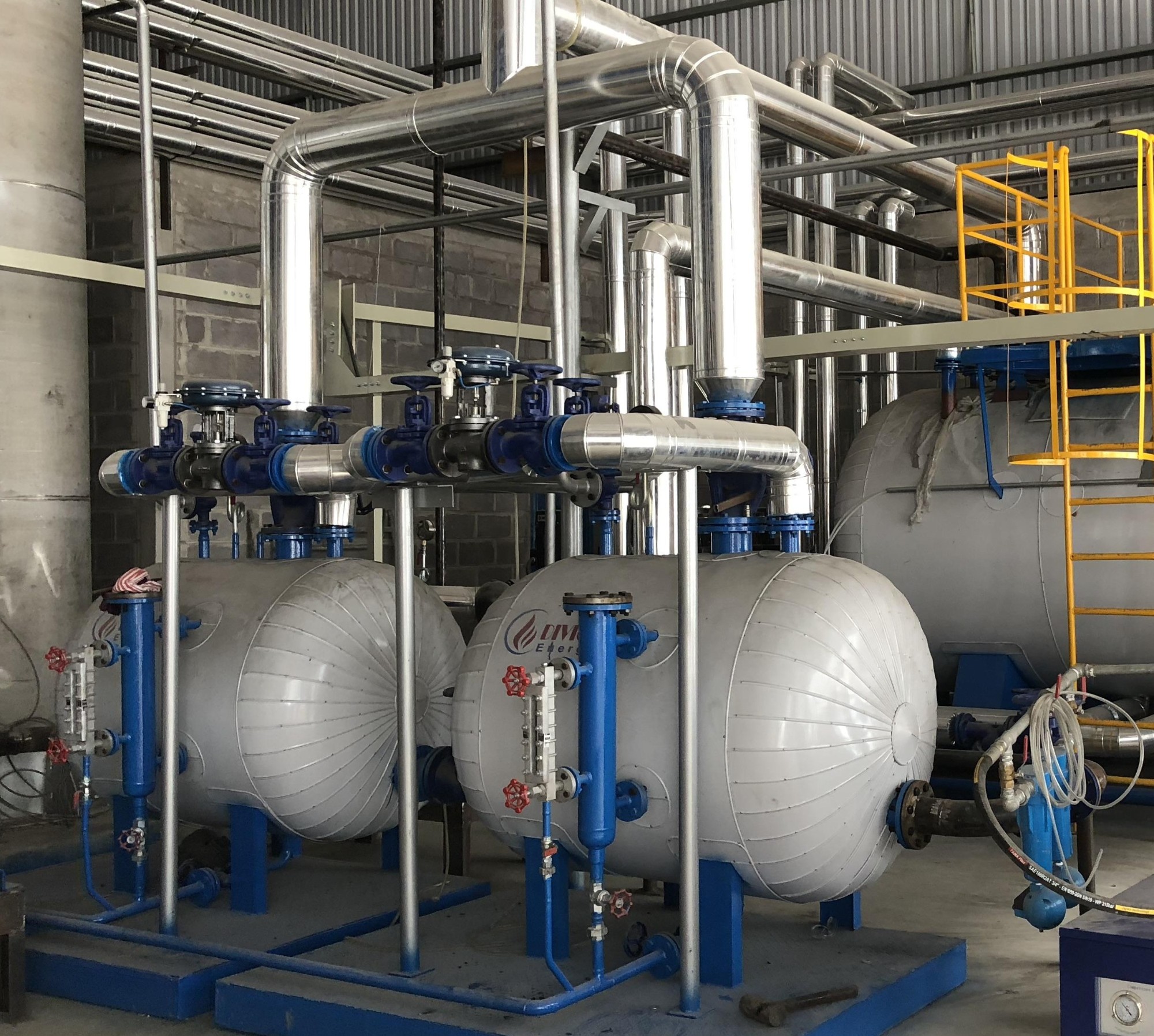
PCHR Steam Saving System | Save 20% Boiler Fuel Cost
While most factories are losing hundreds of thousands of dollars every year due to steam and heat loss, the PCHR Steam Saving System by DIVI delivers a breakthrough solution, helping reduce up to 20% of boiler fuel cost and achieve fast payback within 3–6 months.
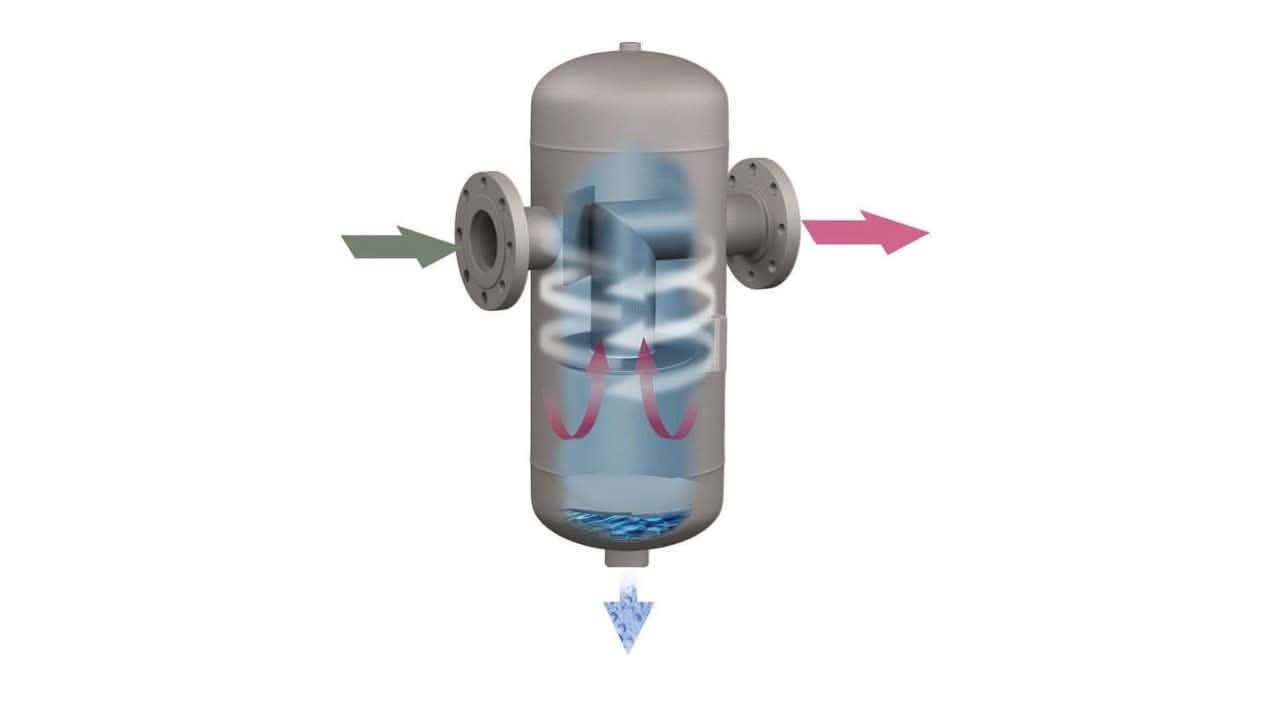
Steam separator
Are you facing condensate problems in your steam system? Steam Separator is the key solution to remove moisture, improve heat transfer, reduce fuel consumption and protect your entire steam system from corrosion and damage.
DIVI GROUP CO., LTD
Office: 588 Pham Van Chieu street, ward 16, Go Vap district, Ho Chi Minh city, Viet Nam
Factory: Khanh Binh 10 street, Khanh Van quarter, Khanh Binh ward, Tan Uyen city, Binh Duong province, Viet Nam
Hotline: +84 942 488 818
Tel: 0274 3800 338
Email: info@divigroup.com.vn

Business license : 0311016524, issue date : 26/07/2011 by Department of Planning and Investment of Ho Chi Minh City
Representatives: Lê Văn Hiếu
Online :
Vistited :